string(7) "m-66998" Burnt Hickory Baptist Church

Sermons

← back to list

Nov 02, 2025

Paul Persecuting to Proclaiming | His Word, His Plan, His People
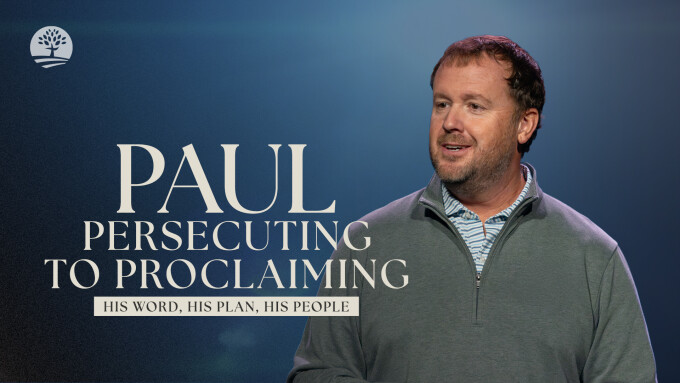
Paul Persecuting to Proclaiming | His Word, His Plan, His People

Passage: Acts 9:1-19

Speaker: Matt Petty

Series: His Word, His Plan, His People

Category: Sunday Sermons

Keywords: sermon, paul, saul, acts 9, what happened to saul on the road to damascus, how god can change anyone’s life, what the bible says about second chances, paul’s transformation story in acts 9, how to know god’s calling for your life, steps to spiritual transformation through faith, how jesus reveals purpose after failure

What does real transformation look like? In Acts 9, Paul encounters Jesus on the road to Damascus, and everything changes. In this sermon, we walk through four pivotal moments in Paul’s life—divine contact, conviction, conversion, and commission—and what they reveal about how God calls and redeems us. Whether you’ve been following Jesus for years or are still wrestling with faith, this message will challenge you to see your story through a new lens of grace, obedience, and purpose.

Well, if you're visiting with us today, thank you so, so much for being here and thank you for just giving us a chance to speak into your life today, to worship with you, and for us just to welcome you into the family.

Over the last couple of months, we've been walking through this series through the Book of Acts, where we have been watching these moments happen that literally not only transform the people that are in the first century, but also transform every single one of us if we will allow them. We've been watching these moments that happened in their lives.

I got to start thinking about moments this week. And here's what I've realized about moments and about decisions that we've been watching through the Book of Acts. In our lives, there are what I would just kind of call, two different categories of events or moments.

The first category are those categories of events that happen all the time, right? They're those decisions we make all the time, the, every day, mundane, one degree at a time, just decisions that as we walk in them, God just continues to shape us one degree at a time, one step at a time, one moment at a time. That's why we talk so much about our daily time in the word, our daily time in prayer, our commitment to what it looks like to walk in the body of Christ. Because over time, God continues to move in us and shape us through these moments, these small one degree moments.

But there's another kind of decision that we make, or another kind of moment or category, that I would just kind of call transformational moments. Now, these moments aren't just everyday mundane moments. These are moments where it almost feels like on one way, the rug is just pulled out from under us.

These are moments where looking back at life, now nothing looks the same. It's moments where something new just presses into us, that we never realized before. Or something absolutely monumental changes us.

Sometimes these moments are at moments where Christ just blows up our worldview. Sometimes they're moments in middle of tragedy where God shows us in a way his love that we've never seen it. Sometimes these moments are ways that absolutely just move us in a direction that we've never seen before. And now we have a new focus or a new reshuffled life.

These are those pins in the map of life that absolutely are moments where we look back on them. You know the moments you're talking about, right? That absolutely changed you. Over these last couple of weeks, we've been watching these moments in the disciples' lives. We've been watching these moments in the early church's life. We've been watching these moments that absolutely the Holy Spirit has reigned down into the souls of these believers. And not only did it change them, it actually set a new trajectory for all of us in the early church, as well as moving forward for the rest of time.

Well, today we're going to pick up on another one of those moments that the Holy Spirit does a massive work in someone's life. This morning, we're going to look into the life of this Pharisee named Saul of Tarshish. Today we're going to be in Acts 9. If you got a copy of scripture, you can go ahead and be turning with me there. And we're going to see this man named Saul of Tarshish, who later all of us mostly would call him the Apostle Paul, the Apostle Paul. And we're actually going to see, today, exactly how God takes the sinner and turns him into a saint. How he takes this persecutor and turns him into a proclaimer.

And we're going to see this moment in Saul's life that is a moment that God actually wants to have in every one of our lives. As you find in Acts 9, let me give you a little bit of a backstory on this man named Saul.

This man named Saul was born into an upper class family. He was incredibly rich. He would have been a Roman citizen at the time. He's an interesting man. A lot of scholars would tell you he's one of the most noteworthy figures in all of first century history. He was educated by the premier Jewish scholar named Gamaliel. If you want to look that one up, he was the best of the best. He was raised to be a Pharisee. You say, "Well, Matt, what does that mean?" Well, it means a lot of things, but one of the biggest things that blows me away about that, is to even be considered a Pharisee, you had to memorize the first five books of the Bible of the Bible.

I'm not talking about a verse from each book. I'm talking about every one of the verses in all the books. Saul was the best of the best.

And one of the things that God gave him as an attribute of who he is, is that no one could ever question the sincerity of Saul's drive. Now, that's a gift from God. It's a gift from God that actually, after his transformation that we're going to see today, that God uses for his kingdom, but on the part before he gives his life to Christ, here's one thing that we know about Saul. Not only was he sincere in his purpose of what he did for the Pharisees and their lives, but he was sincere in how displeasured, and how much he despised, what we would call the followers of Jesus in the Book of Acts.

You see, not only was he great at keeping the law, he hated Christians. This man named Saul hated them to the point to his whole job for the Pharisees was that his job was to ride around and hunt these Christians down to destroy them, to bring them into the court, and do everything he could to squash what we have been seeing in the first eight books or the first eight chapters of this letter called Acts. In fact, the first time that we meet this man named Saul, if you remember right, if you were here a couple of weeks ago, he was standing at the persecution and the martyrdom of this guy named Steven. And not only was he standing there, he was actually the boss. He was the organizer. He was the one that gave the nod to have Stephen killed for his faith. He did everything he can to stamp out the Jesus followers.

Now, in his mind, Saul thought that he was doing God a favor. In his heart, he thought that he was walking out what the Old Testament told him to do. Which, listen to me, students. This is yet another reason why following your heart is never the best plan.

He thought that he was doing what he needed to do, but he was falling in to what Jesus told his disciples in the upper room conversation in John, late in John, he was following this plan, but he was actually walking against who God was.

So the question we're going to answer this morning is how did this guy, that went over this side as one of the greatest persecutors of the faith, end up on this side to be ending up as one of the best promoters of Jesus in the faith?

Let me tell you this on the very beginning of the message. What you're about to see in every step of Saul's moving into meeting Jesus, is exactly what Christ wants to do in every one of us. That's why this message has the chance to transform your life.

So here's what I'm going to do this morning in the time I've got left. I'm going to give you four moments, all right? I'm going to give you three takeaways. I'm going to give you two questions and I'm going to give you one truth. All right? Four, three, two, one. And all of this can help you launch in your faith. All right. Sounded better in my mind. All right, there it was. Okay, here it is. Let me give you the four moments because these are the things that really shape his life and that can shape our lives. Here's the first moment and then I'll read it to you in the scripture.

Number one, in this event, what you're about to see is there was a divine contact, a divine contact from King Jesus. All right. If Paul were standing with us here today, he would say, not only was there a divine contact, there was a contact that nobody saw coming. Nobody saw this coming.

And I, Paul, would tell you, I was the last of the last. I was the least person anyone thought that Jesus would run into. In fact, look at the account in Acts 9. All right watch how Luke describes it. Acts 9:1, it says, "Meanwhile," that meanwhile means we're literally on the heels of last week looking at our friend Philip. "Meanwhile, Saul was still breathing out murderous threats against the Lord's disciples."

Now that we're breathing there, I want you to get in your mind that not only was he just upset about it, but it was a moment that angered him. He couldn't get it off of his mind. It controlled everything he did. He had that little vein that your daddy gets when you're in trouble, on his head all the time.

This word breathing is the idea of a racehorse in the wintertime standing at the blocks and all you see is the steam coming off of it. Or a toddler when you took the Halloween candy away. All right? That is what you're seeing right here. Okay?

And what's happening? Why is he so upset? He's so upset because Christianity is spreading. Every time the heat comes on it, every time somebody tries to squash it, God grows it. Every time they run them out of Jerusalem and run them farther out, it keeps growing. And now, Saul is getting madder and matter and matter. So much so, that here in our account, what I'm about to read to you, he walks in to the official's office and he gets these letters to be sent to Damascus to even more persecute Christians.

So he begins to ride out on this journey to persecute Christians. It would've been about a three to five day ride on his horse. People would've been walking with him. He would've had the Sanhedrin police force with him. So it kind of slowed him down. But being a Pharisee, he didn't want to be around them. So it even rode out in front of them like this prideful man.

And what do you do when you're mad? You're by yourself all the days, three, four, maybe five days. What do you do when all you do is have time to think? You just keep getting madder and madder and madder about what you're doing. And that's exactly what's happening. He's thinking about the day that they stoned Steven. And he's like, "Man, that didn't work. That blew up in our face." He's thinking about the day that Philip went down to the Gentiles and this revival broke out, and that didn't work.

He's thinking about the time that all of these Christians begin to spread in all of these places and all they're doing is preaching the name of Jesus, and this movement of Jesus is following all of the area. He's thinking about all these crazy followers of Jesus, and he sees every single bit of that as a betrayal against his God. He sees it as them betraying God.

But as he reaches the outskirts of Damascus, one of the oldest cities in the world I might add, most scholars believe he would have just been cresting Mount Hermon, looking down into Damascus. What happens in his life is not only is there just this divine contact, but Jesus is the one that actually shows up on the scene. In fact, I want to read it to you. Look at the rest of verse one through verse three. It says this.

"He went in to the high priest." This is what I just told you. "And he asked him for the letters of the synagogues in Damascus so that if he found anyone there who belonged to the way, whether man or woman, he might take them as prisoners to Jerusalem." Verse three, watch it. It says this, "As he near Damascus on his journey, suddenly a light from heaven flashed around him."

Now, I can just hear Paul saying this, right? I can just hear him describing this event. He's like, "Man, I remember this like it was yesterday. It was like noon. I was minding my own business. I was going down the road. I was doing what I thought I needed to do. And all of a sudden, this bright light shined so bright around me."

I actually love how Paul describes this event later on in Acts. One of the coolest parts about what we're doing today is this one event is given to us three different times in the Book of Acts. It's given it to us in Acts 9, as Luke described it. It's a condensed version. It's given it to us in Luke and Acts 22, as Paul gives it, as he's being arrested by this riot of people. And he actually gives it to us in Acts 26, as he's standing in front of King Agrippa trying to convince him of the faith.

But listen to what Paul says about this event in Acts 26:13, how he describes it. He says, "At midday, oh King, I saw on the way a light from heaven, brighter than the sun shining all around me and those who were journeying with me." Now, I want you to notice something about this event that we've been talking about here, this divine contact here or here.

I want you to see something. On this moment, Saul had no intention of meeting Jesus. Do you realize that? Saul wasn't writing out kind of, "Hey, let me compare and contrast all the religions of the day and see which one sticks out to me." He wasn't riding out to Damascus to go, "Hey, let me go check this Christianity thing out and see if it really makes sense."

No, Paul has, at this moment, he has zero intention to find Jesus. But what did Jesus do? Jesus shows up on the scene, the King of Kings, the Lord of Lords, in a bright light shows up in his life. Now for you, it might not be a bright light, but isn't this how most of our faith journeys go? Isn't this it? Most of us would say, "I had no intention of turning my life over to Jesus. I had no intention of meeting Jesus, but something happened. Something happened. Somebody invited me to this deal. I started dating this girl. I went to this pizza deal. My wife finally made me go."

And all of a sudden, what looked like foolishness, something began to happen inside of me and something became clear. You know what this shows me? This shows me that nobody is too far for Jesus to step in. Nobody. In fact, there's a divine contact, but I want you to see what's next because this is important for our lives too. Number one is there's a divine contact, but number two, what we're about to see is there's also a divine conviction. There's a divine conviction.

Now, conviction is a churchy word. If you didn't grow up in church, you don't know what that means. So let me explain it to you. Conviction is not just feeling guilty about something. It's not just realizing something is wrong or feeling bad about something. Actually, conviction is where God presses in to a person to make them see themselves how God sees them. That's what conviction is. Conviction is where God begins to light up our soul and make us take a look at ourselves, not through the lens of culture, but through the lens of God. That's what conviction is.

Conviction is where, when something that used to not make sense or be alluring, now it's like, wait a minute, that might have something to do with who I am. Now, conviction can happen in the life of a believer and an unbeliever.

Let me tell you how it happens to us believers. To us believers, conviction looks like this. It looks like me walking my life in a direction, and all of a sudden I pull up in a moment and the Holy Spirit presses into my soul and shows me that some part of my life is not lining up with where God has me.

That's conviction. Conviction is where I just can't get settled, where I know that what I'm doing is wrong. And every time I take a step, I feel even more despair for it. That's conviction.

Conviction for a non-Christian looks like this. What used to look foolish, what used to look outlandish, what used to look like just a fairytale. Now, God begins to shine a light into it, and we begin to see ourself through the lens of who he is and see ourselves as a sinner in need of a savior that can't redeem ourselves, but needs King Jesus. That's what conviction looks like.

Now, I want you to see what happens in this because non-Christians and Christians can be convicted. But I want to show you right here what happens when a non-Christian comes face to face with Jesus, because this might be where you are this morning.

Watch this in verse four. It says this, after the light shone around him. Acts 9:4 says, "He fell to the ground. And he heard a voice say to him, 'Saul, Saul, why do you persecute me?' 'Who are you, Lord?' Saul asked, 'I am Jesus whom you are persecuting.'"

I love how Jesus repeats two times. He's like, "Hey, Saul, Saul," I love this language. It's like a tool for emphasis. It's like you got in trouble and your mama used your whole name. You know what I'm talking about? That's what Jesus is doing here.

Jesus says, "Hey, Saul, Saul, why? Why are you doing this to me?" Now, what's interesting here is two things. First of all, I want you to realize that while Saul was persecuting the way, he was persecuting followers of Jesus, persecuting the churches of Jesus, what that really looks like is that he was persecuting Jesus, because anytime someone persecutes the church, he's persecuting Jesus.

But secondly, what I want you to see here, is that at this point, Saul has no clue that this bright light in front of him is Jesus. No clue. In fact, he asks the question, "Who are you, Lord?"

Now, the best reading of that in Greek would be, "Who are you, sir?" All right. They use that word Lord a lot, but it wasn't necessarily for King Jesus here. It would be, who are you, sir? Because he has no idea that it's Jesus right here. He's just asking an honest question. He gets knocked off his ride. He sees a person. He says, "Hey, who are you?"

And I love what Jesus does because he does this every time somebody asks this question. He says, "I am Jesus." I'm Jesus, whom you're persecuting. And if this moment now Saul begins to realize two things in his mind that every single person has to realize prior to putting their faith in Jesus.

First, he realizes that this guy named Jesus is really alive, that he's alive, that they crucified him, that he's alive. Saul at this moment realizes that it is in fact Jesus of Nazareth that is standing in front of him alive, that he's alive. This bright light, that surrounded Saul at this moment. It's not a weather event. It's not a lightning strike. It is the glorified King Jesus.

At this moment, you've got to see that he's realizing that Jesus is in front of him. And secondly, he's realizing that Jesus really is who he said he was. You see, we've got to realize that before we come to faith in Jesus. It's the same thing that Saul realizes right here, that Jesus is really who he said he was. He's not stomping on the Jews. He's not stomping on any people. That he is the Messiah, and the offer of salvation is present and his love and his grace is extended for all of those who follow him.

You see, at this moment, Saul was being convicted of the sin of all sins. That's not the sin of murder. It's not the sin of some sexual sin, or lying. It's the sin of unbelief. That's what he's being convicted of right here. He's being convicted right here in this moment, seeing King Jesus, that he has not believed in Jesus.

But it doesn't stop there. Thank the Lord. That it's not just a divine contact. It's not just a divine conviction. But number three, write this down. There's a divine conversion. There's a divine conversion. You see, here's the thing, believer, it's not good enough to be convicted of something. It's not good enough to just come face to face of Jesus. If we really want to know, that we know that we know that we are, in fact, sons and daughters of King Jesus, there has to be a moment in our lives where we submit all of us to all of him and we allow his Lordship to take control of our lives.

It's what you're about to see. Watch what happens in verse six. It says this. Jesus says, "Now get up and go into the city and you will be told what you must do." I love this. Why? Because Jesus reigns down on him, knocks him off the horse. He asks the question, "Who are you?" And obviously right here in verse six, and we'll see just a minute that this actually happens, Saul actually gets up from where he is and he moves into the city.

Now, when Paul tells this story later on in Acts 22:10, listen to what he says to Jesus. When Jesus does this to him, he says, "What shall I do, Lord?" I asked. I love that. Why? Because when conviction sets in, when conversion becomes clear, there is a moment in all of our lives where we turn from our old life and we turn to our new lives.

Listen to me closely. If there is no repentance and is no result of our salvation in how we live our lives, we are not followers of Jesus. There has to be works. Our works don't save us, but our works show us what Christ has done in us.

So at this moment, what's happening in his life? He is realizing right here that he has been radically changed. He's realizing that all of these things that he has been persecuting the believers of Jesus for, are in fact true. He's realizing that all of these truths that he had memorized from the first five books of the Bible, and from all of the New Testament, he's being able to see it through this new lens, this new light. And he's seen it through the new lens of who King Jesus is. You know at this moment, the first thing that came to his mind was the thing that Stephen said when he crucified, or when they killed him by stoning him.

Remember Acts 7:56 when Stephen looked up and watched what he said. Stephen said, "Look, I see heaven open and the Son of Man standing at the right hand of God." You know at this moment, God was revealing that that moment was key, because at this moment, now we're going to call him the Apostle Paul at this moment, right? Now at this moment, he wasn't seeing Jesus stand in heaven. Jesus was standing by his side. At this moment, all of the clarity came into mind. And at this moment, his life has been set free, and he never turns back. Why would he? Because Jesus has reached into a soul.

Let me ask you something, believer. Has this happened in your life? Has there been a moment in your life where something has pressed into your soul? You've realized this Jesus pressing into your soul. You've given your heart and your life and the kingship, and all of who you are to King Jesus and you began to turn your life in another direction because he has redeemed you and saved you.

This is what we're seeing. This is why Paul could write later on in Philippians 3:7, watch what he says, "But whatever were gains to me, I now consider lost for the sake of Christ." I want to know Christ. Yes, I want to know the power of his resurrection, participate in his sufferings, becoming like him unto death. And so, somehow attaining to the resurrection from the dead.

He turns to Jesus, right? There's this conversion in his life. Listen, believers, we're not born with Jesus. We don't get Jesus just because our parents had Jesus. We don't get Jesus just because we know the Bible. We don't get Jesus just because we know people that know Jesus. We get Jesus when Jesus speaks to our soul, convicts our hearts, we turn our lives over to him and we're born again. That's where Jesus steps into our lives.

And that's what we're seeing happen right here. But here's the cool part about it. It doesn't end there. It never ends there in the Book of Acts. Why? Because not only is there this moment where God meets him and contacts him, he convicts his heart, he converts him. The last thing that God does, watch this. Here's what he does. He gives Paul a divine commission. Divine commission.

Do you see that alliteration right there? Man, oh man, Adrian Rogers will be proud, right? There it is, right? Like six of you know who that is, but that's cool. All right, here it is. What does commission mean? Commission is ascending. It's a calling. It's a movement. It's an assignment. So what happens in Paul's life right here? Paul's life turns from the murderous threat that he has always had for Christians to the man that proclaims the love and the hope and the message of Christ to the Gentiles, to the people like us.

In fact, let me read the event to you. It's really long, but it's worth it. Let me read it to you. Acts 9:8. Watch what the Bible says. It says, "Saul, he got up from the ground. But when he opened his eyes, he could see nothing." He's blind. Watch. "So they led him by the hand into Damascus. For three days, he was blind and he didn't eat or drink anything in Damascus. There was a disciple named Ananias. And the Lord called to him in a vision, 'Ananias!' 'Yes, Lord,' He answered. The Lord told him, Go to the house of Judas on Straight Street."

Do you ever think about they had street names back then? They did. Look at there. There it is, right? "And ask him for a name. Ask him for a man from Tarsus named Saul for he is praying. In a vision, he has seen a man named Ananias come and place his hands on him and restore his sight."

"'Lord,' Ananias answered, 'I have heard reports, many reports about this man and all the harm he has done to your holy people in Jerusalem. And he has come here with authority from the chief priest to arrest all who call on your name.'" I love this. Watch verse 15.

It says, "But the Lord said to Ananias," and I want to underline this, "'Go! This man is my chosen instrument to proclaim my name to the Gentiles and their kings and to the people of Israel.'" And listen, listen, listen, if you stick around here for much longer, if you come the rest of this series, you're going to see that this is a glimpse of what is to come, that not only was it a flash in a pan, not only was it a revival moment, not only was it a sign, a commitment card, maybe get baptized and nobody ever sees him again.

No, Paul is set free into a life of service because his life has been radically transformed. And watch what happens in verse 17. It says, "Then Ananias went to the house and he entered it. Placing his hands on Saul, he said, 'Brother Saul, the Lord Jesus who has appeared to you on the road as you were coming here has sent me so that you may see again and be filled with the Holy Spirit.' And immediately something like scales fell from Saul's eyes and he could see again and he got up and was baptized."

Little note there, we've said it almost every week. You get saved, you get baptized. You get saved, you get baptized. It's not emotion, it's obedience. Verse 19. "And after taking some food, he regained his strength." Believers, listen to me. This plan, this plan is the plan that God wants for your life. It's not just for the Apostle Paul. It's not just for the super Christians in Acts. God wants to speak to your soul, radically convict you of your sins, save you, radically give you new life and send you off for his kingdom.

But where are you in the mix? Where are you in the mix? For events, show us who the Apostle Paul is. But what does that mean to us? Let me give you a couple walkaways from this event that really touched my life. There's four events. Let me give you three life-changing takeaways.

Number one, they're quick. Number one, always remember this. Every sinner has a future. Every sinner has a future. What does that mean? You are not too far from God for God to radically redeem you. That's what it means. You have not walked too far. You have not strayed too far. You have not cursed his name enough that he cannot speak to you, save you, and radically give you new life.

Listen to me. His love is big enough and his forgiveness is possible for you. But number two, on top of that, I want you to remember that every saint has a past. Every saint has a past. Not only does every sinner have a future, but listen, every saint has a past. What does that mean? That means don't disqualify yourself from thinking that God can't use you because of some past decision. Don't disqualify yourself thinking that God can't use you because of who you used to be in your past.

Listen, if you are still alive, which is most of you at this point in the message, right? If you are still alive, you have not been disqualified. You haven't. He can use you. Every single believer has a BC, before Christ's life, and he can use you. If Paul can make it, I'm pretty sure that we can too.

Here's the third kind of walkaway I just want to give you. I told you there quick. Number three, every believer has a purpose. Every believer has a purpose. Do not disqualify yourself because somebody in this life has tried to disqualify you. Do not disqualify yourself because Satan has got into you and said, you're not good enough and you're not strong enough and you will never be anything from God. You have been created and you have been saved.

If Christ is your king, you are useful. You can be useful for his kingdom. But the question is, how can you be useful, right? That's the question. Many of us, we know that we can be useful. We know that God has walked us through this grid. We know that he's radically saved us. We know that he's radically sent us, but what we see in Paul's conversion is a way that we can know how we can be useful.

And that's where our two questions come from. In fact, let me give you the two questions that you need to be asking every day to see how you can be useful. Number one is who are you, Lord? Who are you, Lord? I'm going to go back in verse five and circle that question, because that's the question that Paul asked, right? "Who are you, Lord?"

But Matt, I know who the Lord is. You know part of who the Lord is. But let me tell you something, believer, you'll never know all of the Lord. You will never reach a point in your life where you so are spiritually mature that you can just put your life on cruise control and say, "I got you God," and that's enough of you. No, no, no. What if we believers every single morning of our lives got up and just ask God, God, who are you?

Show me your character. Who are you? Show me your love. Who are you? Show me your mercy. Show me your grace. And what if every day that God just showed us a little bit of something new about him, a little bit of something new about him, a little bit more about his love? Can I tell you what would happen in our lives? We would begin to grow in our faith, mature in our faith, and we would begin to watch our life one little degree at a time, take off spiritually so that we would follow him.

Who are you, Lord? That's the relational question. But here's the second question. It's the question of what shall I do, Lord? What shall I do? This is verse six. You might want to underline it. Remember he asked, "Who are you, Lord?" That's relational. But then he asks in verse six, "What shall I do?"

That's the purpose question. What shall I do? And remember what the Lord did for Paul? The Lord was like, "Hey, get up. Get up and go to Damascus. I've got a plan for you." You say, "Man, God doesn't work like this in my life." Hey, I get that. I get that. Matt, I've asked God over and over and over and over, what should I do? And I've never heard from God.

Let me give you a little life hack in Christianity and it's this. In the moments of asking God, what should you do? Let me tell you this. Do something. Do something. Many of you, like we talked about last week, you're still sitting at ground zero because you feel like God has never shown you a clear direction of what to do. Maybe, maybe, maybe God is just telling you to start walking in a direction, and he will let you walk in that direction and be useful for him until he says, "Go another direction." Does that make sense?

I think so many of us come to God with this whole idea of, "Well, God's not showing me what to do, so I'm just going to wait. God's not showing me what to do, so I'm not going to wait." Maybe God just says the next opportunity that comes up, say yes to, and unless he gives you some other opportunity or put something else in you, that's what he wants you to do.

"Who are you, Lord? What should I do?" So we've had a four, we've had a three, we've had a two. Here's the one. There's only one name to be praised and it's King Jesus. It's King Jesus. Amen. How does that even fit into the story? It fits everywhere into the story, because here's the deal. Without King Jesus, without his calling and without his Holy Spirit, without his guidance and without his goodness, without his love, none of this ever happens.

Let me ask you something as we close this morning. Has it happened in you? At what point on the grid do you find your life right now? Has there been a moment in time where you know that God began to speak into you? Has there been a moment in time where you felt that conviction of the Lord and absolutely you walked into his presence and said, "Here I am, King Jesus. Save me. Forgive me and move in me."

Maybe you need to do that today. Maybe something in you today is like that's where you are. Listen, in just a minute, I'm going to be standing right over here by this next step, manner. And I'd love for a bunch of y'all today to, amen. I need to give my life to Jesus and I need him to radically save my soul. Here's the good news in it. He never says no. Never. You might be saying, "Well, Matt, I've given my life to Jesus." Maybe your next step is to go, "Hey Lord, I'm going to start walking, going to start serving, I'm going to start speaking your name. And until you change my direction, I'm going."


Follow Along with the Message


Paul Persecuting to Proclaiming 


November 02, 2025

Matthew 26:26
While they were eating, Jesus took bread, and when he had given thanks, he broke it and gave it to his disciples, saying, “Take and eat; this is my body.”
Matthew 26:27–29
27 Then he took a cup, and when he had given thanks, he gave it to them, saying, “Drink from it, all of you. 28 This is my blood of the covenant, which is poured out for many for the forgiveness of sins. 29 I tell you, I will not drink from this fruit of the vine from now on until that day when I drink it new with you in my Father’s kingdom.”

4 eternally significant moments

1. Divine

Acts 9:1
Meanwhile, Saul was still breathing out murderous threats against the Lord’s disciples.
Acts 9:1–3
He went to the high priest 2 and asked him for letters to the synagogues in Damascus, so that if he found any there who belonged to the Way, whether men or women, he might take them as prisoners to Jerusalem. 3 As he neared Damascus on his journey, suddenly a light from heaven flashed around him.
Acts 26:13
At midday, O King, I saw on the way a light from heaven, brighter than the sun, shining all around me and those who were journeying with me.

2. Divine

Acts 9:4–5
4 He fell to the ground and heard a voice say to him, “Saul, Saul, why do you persecute me?” 5 “Who are you, Lord?” Saul asked. “I am Jesus, whom you are persecuting.”

3. Divine

Acts 9:6
“Now get up and go into the city, and you will be told what you must do.” 
Acts 22:10

“What shall I do, Lord?” I asked. 

Acts 7:56
“Look,” he said, “I see heaven open and the Son of Man standing at the right hand
of God.” 
Philippians 3:7, 10–11

7 But whatever were gains to me I now consider loss for the sake of Christ... 10 I want to know Christ — yes, to know the power of his resurrection and participation in his sufferings, becoming like him in his death, 11 and so, somehow, attaining to the resurrection from the dead.

4. Define

Acts 9:8–15
8 Saul got up from the ground, but when he opened his eyes he could see nothing. So they led him by the hand into Damascus. 9 For three days he was blind, and did not eat or drink anything. 10 In Damascus there was a disciple named Ananias. The Lord called to him in a vision, “Ananias!” “Yes, Lord,” he answered. 11 The Lord told him, “Go to the house of Judas on Straight Street and ask for a man from Tarsus named Saul, for he is praying.
12 In a vision he has seen a man named Ananias come and place his hands on him to restore his sight.” 13 “Lord,” Ananias answered, “I have heard many reports about this man and all the harm he has done to your holy people in Jerusalem. 14 And he has come here with authority from the chief priests to arrest all who call on your name.” 15 But the Lord said to Ananias, “Go! This man is my chosen instrument to proclaim my name to the Gentiles and their kings and to the people of Israel."
Acts 9:17–19
17 Then Ananias went to the house and entered it. Placing his hands on Saul, he said, “Brother Saul, the Lord — Jesus, who appeared to you on the road as you were coming here — has sent me so that you may see again and be filled with the Holy Spirit.” 18 Immediately, something like scales fell from Saul’s eyes, and he could see again. He got up and was baptized, 19 and after taking some food, he regained his strength.

3 life-changing takeaways

1. Every has a .

2. Every has a .

3. Every has a .


2 Simple but life-changing questions

1. are you, Lord?

2. shall I do, Lord?


1 name to be praised

1.


Additional Notes


Email (To Send Copy of Notes)