string(7) "m-66998" Burnt Hickory Baptist Church

Sermons

← back to list

Sep 06, 2026

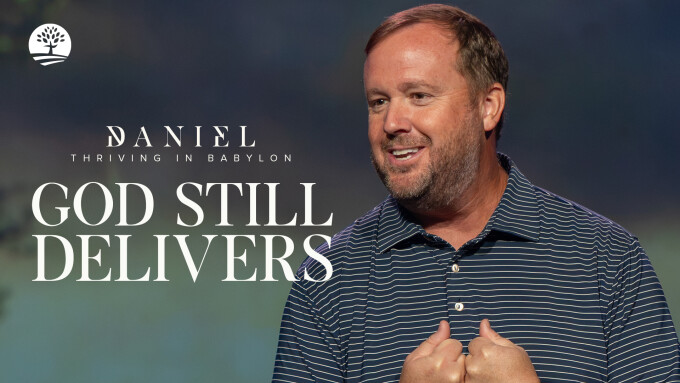
God Still Delivers | Thriving in Babylon

God Still Delivers | Thriving in Babylon

Speaker: Matt Petty

Series: Thriving In Babylon

Category: Sunday Sermons

Keywords: thriving in babylon sermon series, what does daniel 6 mean, daniel 6 sermon about the lions den, daniel and the lions den explained, lessons from daniel in the lions den, what daniel 6 teaches about faithfulness, trusting god when you feel surrounded, how to stay faithful to god under pressure, what does the bible say about consistency in faith, daniel praying three times a day, christian courage when faith is challenged, living out your christian faith publicly, what does the bible say about trials and faith, how god delivered daniel from the lions, why did daniel keep praying, daniel 6 and jesus, how daniel points to jesus, sermon about trusting god in difficult circumstances, how your life can point others to god, burnt hickory baptist church daniel 6 sermon

What can Daniel and the lions’ den teach us about staying faithful to God when the pressure rises? Daniel 6 shows us a man whose faith wasn’t built in a moment of crisis. After decades of consistently serving God, Daniel continued praying even when a new law made that faithfulness dangerous. His integrity, courage, and trust in God were visible not only to his enemies, but also to a king who watched the way Daniel lived. God Still Delivers explores what it means to build a consistent faith, live it publicly, trust God through trials, and use the gifts He has given us for His kingdom. Daniel’s story also points beyond the lions’ den to Jesus. Daniel was delivered from death, but Jesus defeated death. When we feel surrounded or unsure of what comes next, our hope is ultimately found in Him.

If you got a copy of Scripture this morning, I want you to turn with me to Daniel, the Book of Daniel, and we are going to be in chapter six today. Chapter six of Daniel today as we continue this just series that we're calling Thriving in Babylon, where we're reaching back some 2,600 years and we're pulling some principles that Daniel and Shadrach and Meshach and Abednego, how they stood in Babylon. We're pulling these principles forward to see what it looks like for us to live them out in our Babylon. In our, as we've called it every week, West Cobb-a-lonia, right? Where we are now. Here's the interesting part about it. We've said this every week. The same things that they walked through are a lot of the same things that we walked through. The same stance of faith and standing for the name of Jesus is the same then as it is today.

Now, if you haven't been with us over the last couple of weeks, don't worry about it. Let me catch you up on the context, all right? Chapters one through four of Daniel. One through four are Daniel and his friends in another context, in another land after being taken from their homeland, placed in Babylon, it is them standing for the name of God. The first King's name was King Nebuchadnezzar, and no matter what he threw at them, they chose not to bow, but to stand for God. That was the first four or three-and-a-half chapters. Now, in chapter four, Nebuchadnezzar, after 50 years of being served by Daniel and having his second dream from God interpreted by Daniel, he actually meets God. He gives his life to God. He surrendered his heart to God and he honors the God of Daniel and he honors the God of all gods.

But it didn't last long in the kingdom because in between chapters four and chapters five, Nebuchadnezzar dies, 20 years go past and Babylon returns back to its evil ways. And then last week in Daniel 5, we watched a new king named Belshazzar come to the scene to be overrun with pride and he fell. The whole kingdom of Babylon last week fell to the Medes and the Persians. So today, as we turn over into Daniel chapter six, one of the most memorable, one of the greatest faith stories in all of the Old Testament, one of the greatest moments of standing for the name of God, what we're going to see is once again today, Daniel stands when no one else stands. Now Daniel chapter six comes right on the heels of Daniel chapter five. There's no time that goes past. It's right after it. As we said last week, the Babylon Empire has fallen to the Medes and Persians Empire.

And as a result, we've now are watching today a new kingdom, a new set of rulers. And we're going to see today how God shows up again and how God wants us to live out our faith story here in our lives. Let's go to the text today. We're going to read through it and pull some principles for our time-out and we're going to ask God to show up in our faithfulness. Here we go. Daniel 6:1, you're going to see real quick why this is such a great faith story. Here it is. It says this. It says ""It pleased Darius," Darius is the new king, "to appoint 120 satraps to rule throughout the kingdom with three administrators over them, one of whom was Daniel. The satraps were made accountable to them so that the king may not suffer loss.

"Now Daniel," catch this, "Now Daniel so distinguished himself among the administrators and the satraps by his exceptional qualities that the king planned to set him over the whole kingdom." I'm going to set the scene here. There's a new empire, there's a new ruler, there's new laws, there's new structures. And this king named King Darius, he appoints these 120 rulers, these 120, what he calls them satraps. Think of them like district court judges if you would. They all had an area of the kingdom, but on top of those 120, there was three, what he calls administrators. Think of them like maybe a Supreme Court justice or a cabinet member. And they ruled over a group of the satraps and Daniel was actually one of those three top of the top. To which when you read this, now we know where Daniel is late in life, but if you're anything like me, you're asking of the Scripture, well, where is Shadrach, Meshach, and Abednego, right?

Have you ever thought about that? Where's Rack, Shack & Benny in this story again right here? Well, here's the deal. Like I said last week, by this point in Daniel's life, he is over 80 years old. So it's reasonable to think, especially during this time period, that Shadrach, Meshach, and Abednego, no offense to some of our older saints, but they have probably already passed away. They've probably already died of maybe a disease, maybe of some old time just being old. So they're all kind of getting up there in age. Daniel at this point ... Actually a couple of people this week were like, "I've never thought about the fact that Daniel kept getting older."

Yeah, he's not a teenager anymore. He's probably in his early 80s at this point. And I think it's worth pointing out here though that what we've been able to see over these last three week or five weeks is that no matter what stage of Daniel's life he's in, no matter what's happening to him, man, here's one of the coolest parts about Daniel; He just keeps pointing to the Lord. He just keeps worshiping God. He just keeps thriving. He just keeps shining. And no matter what circumstances thrown his way, he's still a light for God's kingdom, a light for others. And on top of that, here's something that we see about him this week, people like him.

You ever though about that from Daniel? People like him and they're actually drawn to Daniel. You know what? There's something to be said about being able to keep God the main thing on this side, but also be a people over here that people are drawn to you and like you. Let me just say this. Those two things don't have to stand at odds of each other if we have them in the right order. You see, if we can keep God the main thing and keep others in a position to where they're drawn to us, one of the coolest things in life can happen.

In fact, if you want to write this principle down, I want to show you something about Daniel's life. Here's the first principle I want to point out in this: excellence truly is an amazing tool for God's kingdom because it gives us a platform to speak the gospel. It really does. And this is actually what we're seeing in Daniel's life here. And Daniel has actually been doing this for 70 years now. Listen, long-term consistency, long-term pointing to God, especially for our older crowd, realizing that God is not done with you. Daniel, over the long run, every stage of the way has stood for God on the left and people have been drawn to him on the right because of what? Because he's been so distinguished. What did the Bible say right here in verse three? It said that the king wanted to place him over all of the authorities. Why? Because of his exceptional qualities.

That's what the king wanted to do. God had given him these gifts on this side, but he used them for God's kingdom and people were drawn to him on this side. Listen to me believers. The question is when you're given gifts by God, are you using them for God's kingdom or yours? See, when we use them for God's kingdom, one of the coolest things happens on this planet is that God continues to give us authority. He continues to bless our lives and we continue to point the glory to King Jesus. Listen, believer, never apologize for being good at something, but leverage it for God's kingdom. Does that make sense?

Don't be one of those Christians that loves Jesus but hates people. Be one that God says, "Hey, I'm going to give them these gifts and they're going to glorify me with them." Give God the glory for who he has made you. Walk out the gifts that God has given you and shine a light on him and people will be drawn to you. Well, everybody's excited about this. Not really. Daniel is, but the other satraps are pretty peeved off. In fact, look at verse four. Watch what it says about it. It says "At this, the administrators and the satraps tried to find grounds for charges against Daniel in his conduct of government affairs, but..." Notice this, "... But they were unable to do so. They could find no corruption in him because he was trustworthy and neither corrupt nor negligent."

Verse five, "Finally, these men said, We will never find any basis for charges against this man, Daniel, unless it has something to do with the law of his God." Now let me see if I can explain what's going on here. The government here has a whole lot of "I want to be in charge," going on. I know that's never happened in another government before, but that's what's happening right here, right? So what happens in the message here? So all the rulers, they get together and they evidently have this little meeting that they "forget to invite Daniel to," right? And they began to go, "Hey, we need to get rid of this guy, Daniel. We need to find out his weaknesses. We need to find out what he has done against other people. We need to find out his history."

So what do they do? They go back and they look at his voting records. They go back and maybe interview some of his friends he went to the Babylonian University with to see how they could cancel him. They went back and they looked at how he dealt with his family, maybe some old friends, what they would say about him. They went back, this is how my mind's working, they went back and they interviewed or maybe even hired a private investigator to follow him on his next business trip to see who he's really hanging out with.

They searched his text messages, they bugged his house. They went through his internet search history. Might be taking the text a little far, but this is what they did, right? And they're thinking "We got to find something in Daniel's life to nail him with right here. We got to find something. He's been serving for 70 years. There's going to be something we can cancel him with." I mean, you've been watching the political ads back in 1923, this guy did something, right? So they turn over every rock in Daniel's life is what the text says. You realize that he's been serving for 70 years. Man, I hope that my faithfulness is even close to this.

You don't have to look that hard to find something in my life, right? Amen? For 70 years, let me tell you what they find. Let me tell you it's important. They find that Daniel is number one, trustworthy. They find that number two, he has no corruption in his life. And number three, that he's not negligent in doing the duties of the government that he has been assigned to do. Oh church, that's an example for all of us to live in our culture, isn't it? That's an example. That's how people are drawn to us when that's what we live. When we're trustworthy, there's no corruption. There's no negligence in how we do our work that we've been tasked to do. But there's one more thing about Daniel's life that stood out. And that is the fact that all of these rulers that are getting together to try to nail him with something, they also find out that Daniel lives out his faith publicly, that he lives it out in front of everybody.

He's not ashamed for standing for who his God is. There's no holding back to which some of us will say, "Well Matt, I feel like I kind of have a handle on those first three things. I feel like I'm pretty trustworthy. There's not a lot of corruption in me. I do what's asked of me to do, but man, Matt, when you start talking about me living my faith publicly, that's where it's kind of like, I'm just really not sure where that's where I am." Let me just speak pretty frankly to you and say this, that's not how faith works in God. There's no way that you can be radically redeemed, saved, given a new life, having your eternity secured and we not want to proclaim that to other people. There's no way that you just can't be proud about that.

And let me lean in a little bit farther and say it like this church. If everyone else can be proud of what and who they stand for, even when it's not who God has created them to be, then why in the world would we not want to go publicly proud that we're forgiven, born again, moved into God's kingdom and that we're now sons and daughters of him? Why in the world would we not? And then just let culture say what it needs to say. Here's the walkaway I get from all of this little part of the text right here. You can write in your notes. If the world is going to nail you for something, let it be your radical obedience to God. They're going to find something, but let it be the fact that you will not bow down.

Now let's keep reading. Watch what happens here because Daniel's about to get in trouble. Verse six says, "So the administrators and the satraps, they went as a group to the king and they said, 'May King Darius live forever. The royal administrators, the prefects, the satraps, the advisors, the governors, they said, have all agreed." Daniel would argue because he wasn't there, right? "They've all agreed that the king should issue an edict and enforce. They all agree that the king should issue an edict and enforce the decree that if anyone who prays to any God or human during the next 30 days, except you our majesty, shall be thrown into the lion's den. Now your majesty, issue this decree, put it in writing so that it cannot be altered in accordance with the law of the Medes and the Persians, which cannot be repealed." Verse nine.

So King Darius put the decree in writing. Now this seems odd, so let me see if I can just kind of retail it a little bit where we can understand it. In the secret meeting that Daniel is being set up in, right, what do they do? They go over to the king. They go to the king, which these 120 satraps, most theologians believe that they would've been leftovers of the wise men culture. So they had been in Babylon for a long time. They knew the ways of Babylon.

They go over to King Darius, which is now the new king and they say, "Hey King, we know how this place runs and we know what you need to do. We know that you want some unity. We know that you want people to look to you as the big ruler of this place. We know that you want to move this place in a unified direction." So they say, "King, we've got an idea for you. Here's what we want you to think about. We want you to do a 30-day pause in praying to anything except for you. King, we want you to do this to show that you're in charge, to show that you are the one that provide. King, King, King, is that okay with you?" You get this? They stroke the ego of the King a little bit.

They come to the King, how people always come to the King to kind of look at his pride and His glory. And then Darius is like, "Huh. I mean, we do need some unity, right? We do need to move in a direction. And I guess since this is y'all's idea, I mean, why am I going to go against y'all? You know what? Let's do it. For 30 days, nobody can pray or ask anything of anything else except for this guy." It's what Darius says. So what happens? He signs it into law. Now that doesn't really mean a lot to us, right? But to them, the law of the Medes and the Persians has this incredible historicalness to it. Let me see if I can explain it. Before the law of the Medes and Persians came out, every king that proclaimed the law, they could proclaim whatever law that they wanted to.

They're sovereign over the whole empire. In other words, if you didn't like the color red and you were king, you could say, "Nobody in my kingdom will ever wear red," right? If your wife made you mad at a party one night, you could proclaim a law that said, "Wives can no longer speak in my kingdom." Don't be saying amen. It's going to get you in trouble, right? You could say that, okay? At any point at any time, a king could proclaim any kind of outlandish law. And then the next morning when they woke up and came to their senses or were off of their little bender the night before, they would then just go and change the law back to where they wanted it. Well, the Medes and Persians got tired of this. So they began to write this new thing in the law saying that when you sign something into a law as the king of the Medes and Persians, you couldn't change it anymore because you're supposed to represent the God of the day. You weren't supposed to do that.

So now what happens is they're coming over to Darius. He signs this thing into law and he no longer has the authority to repeal that law. But Darius goes, "You know what? It's just 30 days. Let's try it out and it's for unity's sake. Let's just do it." And then look at verse 10 though because not everybody's excited about this law. Watch Daniel's response. Says this. "Now when Daniel learned about that decree that had been published, he went home to his upstairs room where the windows opened towards Jerusalem and three times a day he got down on his knees and he prayed giving thanks to his God..." Here it is, "... Just as he had done before." Now notice Daniel, his whole life has been rocked at this point. His whole life has been represented by standing for God, by having faith in God, by praying to God.

And notice right here, he hears the decree. And what does Daniel do? He doesn't go home and start a protest. He doesn't go home and start a Reddit campaign. He doesn't go home and hire some kind of lawyer. No, he went home and very specifically opened his windows towards Jerusalem and he prayed. [inaudible 00:19:01] that. I get the prayer thing, but tell me what that means. Let me see if I can bring some light to it. He opened his windows towards Jerusalem because towards Jerusalem was the remembrance of where God's presence stood the greatest. Remember in the Old Testament, the temple in Jerusalem represented the House of God, the presence of God. It's where the sacrifices were made to God. And so Daniel opens his windows. He sets his face towards the city and towards the kingship and the glory and the power and the presence of who God was.

That's what he's doing. And on top of that, he's doing what Solomon asked of God in one 1 Kings 8 when he was dedicating the temple. Solomon asked God to pay special attention to those that are outside the kingdom that put their faces back towards Jerusalem to pray. So Daniel has his face towards the power of God, his spirit towards the power of God, his whole presence and soul back to the power of God, asking him to move in his life and the kingdom's life. Let me ask you something. Does that look like your prayer life? You see, in our context, we don't put our faces towards Jerusalem. We put our faces towards King Jesus, the author and perfecter of our faith, King Jesus who was the ultimate sacrifice for our faith. King Jesus who meets us right where we are and gives us the power to stand.

He sets his face towards Jerusalem and notice what the last verse, verse 10, the end of it says, "And he does it just like ..." this is what it implies, "... Just like he always does." You notice that about Daniel right here? Daniel didn't pray more in this situation just to be some little prayer rebel. All right? He didn't do that. Don't say you had never done that before, right? But he also didn't pray less just to be safe. What Daniel did in this situation is he did what he always did. He went to God how he always went to God. He lived such a consistent life is that he went home. He was an example of consistency and he lifted up his soul before the God of the Universe. He didn't hear the edict and march on the gates with some new attempt to pray.

No, this is what he did. It's what he's always done. It's where his life had been built on. Prayer was fundamental. Prayer wasn't some last ditch effort. It wasn't some supplemental effort. Prayer is what he had always given his heart to to give him strength. For 70 years, Daniel had been doing the same thing. We've been looking at it the last couple of weeks. We saw he prayed before the dream. We saw he prayed when he went home, when he stood against the king. You know what he's doing? He's not letting some 30 day decree interrupt his 70-year habits. That's what he's doing. We're seeing the true Daniel here. He's not creating something new because turmoil's going around him. It's where his life has always pointed in the good times and the bad times. We're seeing his true character come out. We're seeing the behind the scenes of Daniel's faith and Daniel's practice.

Why? Why does this matter? It matters greatly. In fact, write this principle down. It matters because crisis doesn't create character, it reveals it. That's why it matters. It reveals it. You realize that you don't build faith in crisis moments. You live out the faith that you bring into the crisis moment. We can camp out here for a while, but I think you get it, right? It means that the real us comes out in trials. The faith and practices that are always there is what comes out in trials. It's what he's doing. He does what he always does. Now keep going in the text because evidently these guys that brought this charge before the king, they knew that Daniel would not quit praying. I wonder if people, do they know that about you?

And so they just happened to kind of get a little group together and get their lawn chairs and binoculars and they go over to Daniel's house because they know what Daniel's about to do. They know that Daniel's just going to do what he always does, right? He's going to go home and he's going to pray to his God. Look at verse 11. Says, "So these men went as a group and they found Daniel praying and asking God for his help. So they went to the king and they spoke to him about his royal decree and they said, 'King, did you not publish a decree that during the next 30 days that anyone who prays to God or any human being, except for you, your majesty, you would throw them into the lion's den?' The king answers, 'the decree stands in accordance to the laws and the Medes and the Persians, which cannot be repealed." King Darius is like, "Yeah, I wrote it. Why are you reminding me of it?" right?

Look at verse 13 though. "Then they say to the king, just like any little little brother would do to his older brother, watch this: "Daniel, who's one of those exiles from Judah, he pays no attention to you, your majesty or to the decree that you put in writing. He still prays three times a day." You notice what they said? Still does it. It's not new. When the king heard this, he was greatly distressed and he was determined to rescue Daniel. Now that's not where we saw this going, right? And he made every effort until sundown to save him.

Now, I think this is where Darius realizes he's been duped. Do you see that, right? What you mean by that, man? He likes Daniel. He has seen Daniel's work. He has seen Daniel's courage, but now he is stuck doing what he doesn't want to do. He realizes there's nothing he can do for Daniel. He respects Daniel. And on top of respecting Daniel, what you're going to keep seeing in the text is there's no doubt that Darius knew Daniel's devotion to his God. There's no doubt that Darius knew that Daniel loved God and Daniel worshiped God and Daniel prayed to God and that Daniel would stake his life on Yahweh, God. You're going to see it in just a minute, but now time is running out for Daniel.

Time is running out. In this government system that we're reading about here, there was no years of appeals. When the verdict was had, it was either carried out immediately or that evening. So now King Darius knows, "Man, I can't do anything about that," and the sun is setting. And evidently King Darius is so distraught that other people can see it in his face because actually the wise men, the satraps, they come back before him in verse 15 just to remind them. Watch what they say. They said this in verse 15. It says, "Then the men went as a group to King Darius and they said to him, 'Remember your majesty that according to the laws of the Medes and Persians, no decree or edict that the king issues can be changed.'"

He's like, "Yeah, I know that. I just said it in the verse before," right? But in verse 16, watch what happens. "So the king gave the order and they brought Daniel ..." you been waiting on this the whole book, you know you have, "... And they threw him in to the lion's den." And the king said to Daniel, "May your God whom you serve continually, rescue you."

I think that's one of the key verses of this whole chapter right here. And I think in verse 16 is such a challenge for us of how we need to live in our Babylon. You see, Darius knew Daniel, knew him in an official capacity. He respected Daniel's work in government. He praised him for his character. He knew what he looked like. He knew that he worshiped God. In fact, what he just said, and I quote, Darius says, "May your God whom you serve ..." What? "... Continually, rescue you." What does that mean? That means that Darius, the king, had saw Daniel serve, knew who Daniel served, knew the importance of God in his life. In fact, listen, Darius didn't know the law of God. You realize that, right? He wasn't scrolling his Bible every morning to look for a truth of the day, right? He didn't know what Moses had said. He knew none of the scriptures. He had never been to the temple, but Darius knew Daniel.

And you know what he knew because he knew Daniel, he knew the God of Daniel because he watched Daniel's life live it out. How to describe it? Continually. Continually. You see, he saw Daniel serve God. He saw Daniel worship God, not just on Sundays, not when it was convenient, but continually. And Darius was introduced already to Daniel's God. Write this principle down, it helped me out this week. Listen, the world may not read your Bible, but they're reading your life. They're reading your life and how you love and how you live. They're reading what you worship and what you're devoted to. They're reading how you deal with your family, how you handle stress, how you treat people. They're reading really if you truly, if you really do love God and stand for him or not.

In fact, Darius says, and I quote, "I hope your God does it for you." Watch what happens in verse 17. Says, "The stone was brought and placed over the mouth of the den, and the king sealed it with his own singlet ring and with the rings of his nobles so that the situation might not be changed. And then the king returned to his palace and he spent the night without eating and without any entertainment being brought to him and he could not sleep. And at the first light of dawn ..." sound like another story in the New Testament? "... The king got up. He hurried to the lion's den ..." verse 20. "... And when he came to the den, he called out to Daniel in an anguished voice. 'Daniel, servant of the living God, has your God who served you continually, who you serve continually, been able to rescue you from the lions?'"

Let me set the scene. The king, he goes back to his opulent palace. It's probably the greatest palace on the face of the earth at this time. And it just came out of the Kingdom of Gold. Now we're adding all of the riches of the Medes and the Persians to it. The king, Darius, he goes back to his palace. He goes straight to his room. He's fasting. He's sleepless. He has no entertainment. He has nobody around him. He's lonely. He's in his room. He has no rest that evening. But not to ruin the next verses for you in the story, but Daniel at this point has been thrown into the lion's den. And at least in my mind, he is over in the corner leaned up against a purring little lion, taking the best nap of his life. Wrote this principle down this week. It's always better to be in a pit with God than it is to be in a palace without him. It's what we're seeing in the text.

We're seeing Daniel that is standing in the name of Jesus, standing in the name of God. And he is enjoying not just these little lions that are supposed to eat him, but he is enjoying the lion of the tribe of Judah that delivers us in whatever that we're living in. But you've got King Darius who has everything that this world has to offer him. And he's sleepless, he's alone, he's hungry, and he has zero entertainment in his life. Let me tell you something, church, that's the difference of seeking out the things the world has to offer in walking with Jesus. In walking with Jesus. No matter what we're walking in, when Jesus is with us. No matter what happens, we win. We win. In fact, watch the rest of the verses. Watch it, what happens. Because the first sight of morning, the king, because he's not asleep anyway, right? He runs down to the cave where the lions were. He unseals the opening. He yells down to Daniel, "Daniel, did your God do it?"

Now in my mind, because this plays out like a movie in my mind, in my mind, Daniel hears him yell down and he just pauses for like 30 seconds just to build some anticipation. And then finally, watch what Daniel says. Verse 21. "Daniel answered, 'May the king live forever.'" Now I'm not sure no matter where my faith is, I could ever say that back to the king who just threw me in the lion's den, amen? But watch why he could say it. Verse 22, "My God ..." underline this key verse, "... My God sent his angel and he shut the mouths of the lions. And they haven't hurt me because I was found innocent in his sight, nor have I done anything wrong before you, your majesty.

The king was overjoyed and he gave the orders to lift Daniel out of the den. And when Daniel was lifted from the den, no wound was found on him because he had trusted in his God." You realize this? There's no broken hip. He's 81 years old. There's no broken femur. There's nothing wrong with him. He's not coughing because of the dust. There is no scratches. There is no elbows. There is no knee. I love it. This probably took a minute because Daniel was old. Nobody's going to jump down there and get him out. They had to fish him out of this pit. This has never happened before, but I love Daniel's reply. He's like, "God did it. There's no mistaken. God did it. He sent his angel. He shut the mouth. I'm alive and God wins." Man, I love this. Now we're not really sure if Daniel got to see the angels or talk to them or whatever. We're going to have to ask him that one day on our own.

But God shut the lives of the lions down. He shut their mouths and Daniel stands to represent the power and the faithfulness of who God is in our lives. But here's the deal. God's not finished with the story. I know he's finished with the story in the storybook Bible of the kids, but he's not finished. He's about to do something even greater. In fact, even when our life is in a situation, we don't know the outcome or it's not how we were choose. Listen to this principle right here, your trials really do become your greatest testimony. They do. Daniel didn't wake up that day and go, "Boy, I hope I can go visit that lion's den."

No. But God, in the God calculus and the eternalness of who God is says," Hey, I tell you what I can do. I can send my boy Daniel down there with those lions. I can shut the lion's mouth. I can get my boy Daniel out of there. And then because of his faithfulness, because of his courage, because of his standing for me, my name can be proclaimed, not just to these couple of people that are around, but my name can be proclaimed to the nations, to everybody. "Because my heart ..." God says, "... My power..." God says, "... Can be proclaimed to all because what Daniel does,."

Watch what happens. Watch what the king does as a result of this because the king takes it up another step. Now this is for all the skeptics out there that say, "Well, the lions weren't hungry, right? The lions were sick. They weren't really lions. They probably wouldn't have eaten him." It's the part that doesn't make it in the storybook for the kids. Says this at verse 24, now I'm not saying this is prescriptive. I'm just saying this is what the evil king did, okay?

Says "At the king's command ..." in verse 24, "... The men who had falsely accused Daniel were brought in and were thrown into the lion's den." Now we don't know how many people this was, right? But not only were they thrown, watch this, "... Along with their wives and their children. And before they reached the floor of the den, the lions overpowered them and crushed all their bones." Now look, I get it. That's not in the storybook Bible for your kids, right? But you know what it shows? It shows that yes, your sin affects you, but it also affects your family as well. Listen, men, when you take a stand against God, it affects every single part of your family. That's what you're seeing right there.

Keep watching the testimony though because King Darius doesn't just throw them into the deal and it's over with. King Darius actually declares at this moment his God's name to everyone. Watch his message. Watch his message. We could probably make a whole sermon out of this, but we don't have time for that. Watch this, verse 25. "Then King Darius wrote to all the nations and the peoples of every language on all the earth and said, 'May you prosper greatly. I issued a decree that out of my kingdom that all people must fear and reverence the God of Daniel ...'" you see this? "... For he ..." listen to his message, "... For he's the living God. He endures forever. His kingdom will not be destroyed. His dominion will never end. He rescues and saves. He performs signs and wonders in the heavens and on earth. He's rescued Daniel from the power of the lions."

Verse 28, the last verse says this: "And so Daniel prospered during the reign of Darius and the reign of Cyrus the Persian." Did you see the message that this pagan king or maybe new believer king does? He says, "Man, he's a living God, an eternal God, a God that is faithful, a God that is with him and out there. He's a miracle working God. He provides signs and wonders. He rescues Daniel. His kingdom is bigger than any king's kingdom." And all of this, here's the point of the whole message. All of this happens because one guy chooses to be faithful. You see it, right? You see it. This is massive for our lives because many of us would say, "Man, what am I going to do for the kingdom? I'm not a big shot. I don't preach. I'm not a big evangelist. I don't have a big following."

But listen, you never know who you will reach and what they will do. You never know who you will reach and what God will do. In fact, write this down, last principle: your personal faithfulness is a platform for God's global glory. Listen, don't sell yourself short. Don't sell yourself short. The moment you stand is the moment God says, "I've got you." The moment you stand, the impact of your faithfulness and the impact of your courage, you never know the reach it's going to have.

You never know what the greater Daniel, King Jesus, will do with your faithfulness. You never know how he's going to multiply your lives. Listen, listen, listen. Man, this message is usually preached in the context of this. Dare to be Daniel. Ain't that the name of the series you're supposed to do on this, right? But I'm going to say this, trust in Jesus because he's the greater Daniel. This whole text points to Jesus. Have you caught onto that as we're reading the text? Daniel was seen as sinless. He had sin, but he was seen as pure, right? Jesus was sinless. Jesus and Daniel were targeted by rulers and political leaders.

Both of them were falsely accused. Both of them had a political leader, a ruler that tried to get them out of the situation. Both Jesus and Daniel were cast into a pit. Both Jesus and Daniel had a stone rolled over their pit. It was sealed with an authority. Both Jesus and Daniel spent night, two nights for Jesus, in the pit. Both Daniel and Jesus when they were supposedly dead, came out of that pit. Daniel was risen to be over the kingdom of the Medes and Persians, but Jesus was risen to be over all kingdoms and authorities and powers and rule. Daniel was delivered from death, but Jesus defeated death. Daniel eventually died, but Jesus conquers death and brings life.

The story of Daniel is not just this ancient story. It's a story that when there are times when we may feel trapped, we may feel surrounded, that there's nothing else I can do. We may wonder if God is going to come through. The story of Daniel is really the story of a greater Daniel named King Jesus, that meets us right in the fire, right in the pit, right in the workplace. And he's able to deliver us. And all he asks out of us is our faithfulness.

So here's my question as we close this morning. Has there been a moment where you have surrendered your life into the hands of King Jesus, where you've turned from your sin and shame and turned to the one that can give you life? Do you need to do that today? Do you need to say "Jesus, here I am? Forgive me. Here I am, wash me clean. Come into my life, be my savior, my Lord, and rescue me from the miry clay and place my feet on the rock because you are the lion of the tribe of Judah and you are my king."

Do you need to do that today? Just a minute. We're going to have an invitation. I'm going to stand right by this next step banner and I would love, love, love to pray with you and pray over you as you receive Jesus today. For some of you though, you are believers. When you put yourself in the context of this, you're just really not sure looking backwards if you would've had the courage and the faith to stand. Let me ask you something though. Is there anyone greater than Jesus that can deliver you? Give your life to ...


Follow Along with the Message


God Still Delivers 

September 6, 2026

Daniel 6:1–3
1 It pleased Darius to appoint 120 satraps to rule throughout the kingdom, 2 with three administrators over them, one of whom was Daniel. The satraps were made accountable to them so that the king might not suffer loss. 3 Now Daniel so distinguished himself among the administrators and the satraps by his exceptional qualities that the king planned to set him over the whole kingdom.

PRINCIPLE: Excellence truly is an tool for God’s Kingdom because it gives a platform to speak for God.

Daniel 6:4–5
4 At this, the administrators and the satraps tried to find grounds for charges against Daniel in his conduct of government affairs, but they were unable to do so. They could find no corruption in him, because he was trustworthy and neither corrupt nor negligent. 5 Finally these men said, “We will never find any basis for charges against this man Daniel unless it has something to do with the law of his God.”

PRINCIPLE: If the world is going to nail you for something, let it be your radical to God.

Daniel 6:6–9
6 So these administrators and satraps went as a group to the king and said: “May King Darius live forever! 7 The royal administrators, prefects, satraps, advisers and governors have all agreed that the king should issue an edict and enforce the decree that anyone who prays to any god or human being during the next thirty days, except to you, Your Majesty, shall be thrown into the lions’ den. 8 Now, Your Majesty, issue the decree and put it in writing so that it cannot be altered — in accordance with the law of the Medes and Persians, which cannot be repealed.” 9 So King Darius put the decree in writing.
Daniel 6:10
Now when Daniel learned that the decree had been published, he went home to his upstairs room where the windows opened toward Jerusalem. Three times a day he got down on his knees and prayed, giving thanks to his God, just as he had done before.

PRINCIPLE: Crisis doesn’t create character; it it.

Daniel 6:11–12
11 Then these men went as a group and found Daniel praying and asking God for help. 12 So they went to the king and spoke to him about his royal decree: “Did you not publish a decree that during the next thirty days anyone who prays to any god or human being except to you, Your Majesty, would be thrown into the lions’ den?” The king answered, “The decree stands — in accordance with the law of the Medes and Persians, which cannot be repealed.”
Daniel 6:13–14
13 Then they said to the king, “Daniel, who is one of the exiles from Judah, pays no attention to you, Your Majesty, or to the decree you put in writing. He still prays three times a day.” 14 When the king heard this, he was greatly distressed; he was determined to rescue Daniel and made every effort until sundown to save him.
Daniel 6:15–16
15 Then the men went as a group to King Darius and said to him, “Remember, Your Majesty, that according to the law of the Medes and Persians no decree or edict that the king issues can be changed.” 16 So the king gave the order, and they brought Daniel and threw him into the lions’ den. The king said to Daniel, “May your God, whom you serve continually, rescue you!”

PRINCIPLE: The world may not read your Bible, but they are reading your .

Daniel 6:17–20
17 A stone was brought and placed over the mouth of the den, and the king sealed it with his own signet ring and with the rings of his nobles, so that Daniel’s situation might not be changed. 18 Then the king returned to his palace and spent the night without eating and without any entertainment being brought to him. And he could not sleep. 19 At the first light of dawn, the king got up and hurried to the lions’ den. 20 When he came near the den, he called to Daniel in an anguished voice, “Daniel, servant of the living God, has your God, whom you serve continually, been able to rescue you from the lions?”

PRINCIPLE: It’s always better to be in a pit with God than in a palace Him.

Daniel 6:21–23
21 Daniel answered, “May the king live forever! 22 My God sent his angel, and he shut the mouths of the lions. They have not hurt me, because I was found innocent in his sight. Nor have I ever done any wrong before you, Your Majesty.” 23 The king was overjoyed and gave orders to lift Daniel out of the den. And when Daniel was lifted from the den, no wound was found on him, because he had trusted in his God.

PRINCIPLE: Your trials really do become your greatest .

Daniel 6:24
At the king’s command, the men who had falsely accused Daniel were brought in and thrown into the lions’ den, along with their wives and children. And before they reached the floor of the den, the lions overpowered them and crushed all their bones.
Daniel 6:25–28
25 Then King Darius wrote to all the nations and peoples of every language in all the earth: “May you prosper greatly! 26 “I issue a decree that in every part of my kingdom people must fear and reverence the God of Daniel. “For he is the living God and he endures forever; his kingdom will not be destroyed, his dominion will never end. 27 He rescues and he saves; he performs signs and wonders in the heavens and on the earth. He has rescued Daniel from the power of the lions.” 28 So Daniel prospered during the reign of Darius and the reign of Cyrus the Persian.

PRINCIPLE: Your personal faithfulness is a platform for God’s glory.


Additional Notes


Email (To Send Copy of Notes)